
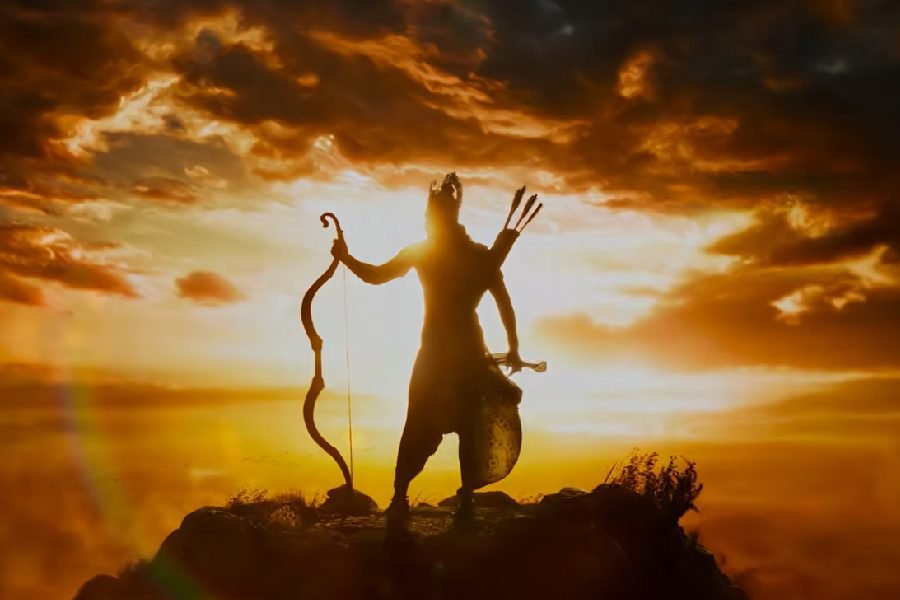
Ramayana: Part I – A Myth Reimagined on the Grandest Canvas

The Namit Malhotra’s Ramayana: Part I, directed by Nitesh Tiwari, is an audacious undertaking that translates one of India’s most cherished epics into a spectacle of international magnitude. The film seeks to preserve the tale’s moral gravitas while embracing the visual vocabulary of contemporary blockbuster cinema.
Mise-en-scène and Visual Grandeur
The mise-en-scène is monumental, arranging architecture, landscapes, ceremonial spaces and battle tableaux into an immersive mythological universe. Ayodhya glows with serenity and regal splendour, while Lanka radiates opulence and menace. DNEG’s visual effects lend scale to the supernatural. At times, however, the pursuit of grandeur threatens to eclipse human emotion; the most affecting moments emerge when spectacle recedes and relationships take centre stage.
Plot and Narrative
The first instalment follows Rama’s life in Ayodhya, his marriage to Sita, the political machinations behind his fourteen-year exile, and the events drawing him towards Ravana. The narrative establishes the larger conflict rather than offering a self-contained conclusion. Its reverence for the source material is evident, although certain passages feel expansive, preparing audiences for a saga still unfolding.
Costumes and Production Design
Costumes extend character and cultural imagination. Draped fabrics, ornate jewellery, armour and royal silhouettes distinguish protagonists from antagonists. Their textures evoke antiquity without reducing the characters to ornamental figures. The production design, likewise, creates a civilisation with a distinctive architectural and symbolic identity.
Performances
Ranbir Kapoor approaches Rama with composure, restraint and understated nobility. Sai Pallavi lends Sita grace, emotional intelligence and resilience. Yash’s Ravana is imposing, charismatic and charged with volcanic intensity, a compelling counterpoint to Rama’s measured presence. Ravi Dubey brings warmth and conviction to Lakshmana, while the supporting ensemble enriches the epic’s dramatis personae.
Music and Sound
The collaboration between A. R. Rahman and Hans Zimmer gives the film an ambitious sonic identity. Rahman’s melodic sensibility and Zimmer’s orchestral scale heighten its spiritual and dramatic dimensions, though the score may not linger in the memory as powerfully as the imagery.
Overview
Ultimately, Ramayana: Part I is an impressive, imperfect act of cinematic faith: visually lavish, culturally resonant and propelled by committed performances. Its greatest achievement is its willingness to dream on an immense scale; its limitation is that emotional intimacy does not always match visual ambition. Yet the film leaves its world alive in the imagination—and its story unmistakably unfinished. A tribute to tradition, and a wager on cinema.
Critical perspective: The review balances the film’s visual magnificence with its narrative and emotional limitations, while examining the principal cinematic departments. The cast, production and musical details are grounded in published film coverage.